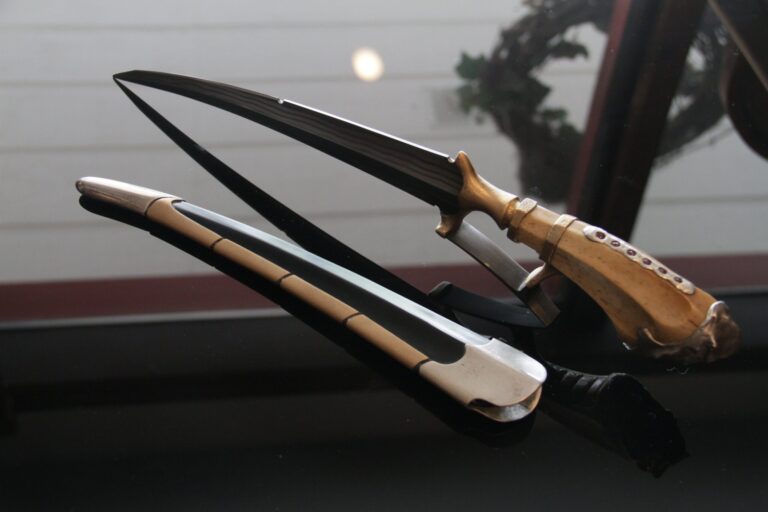
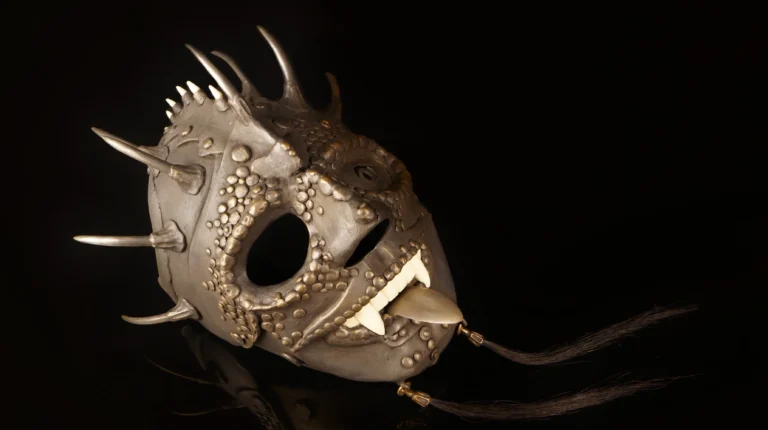
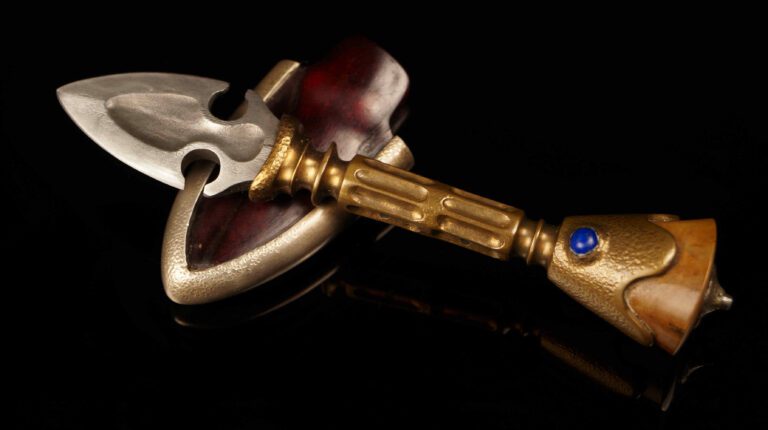
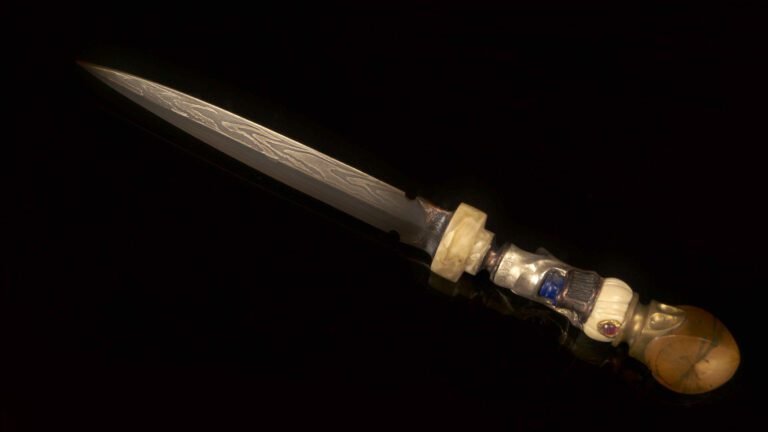
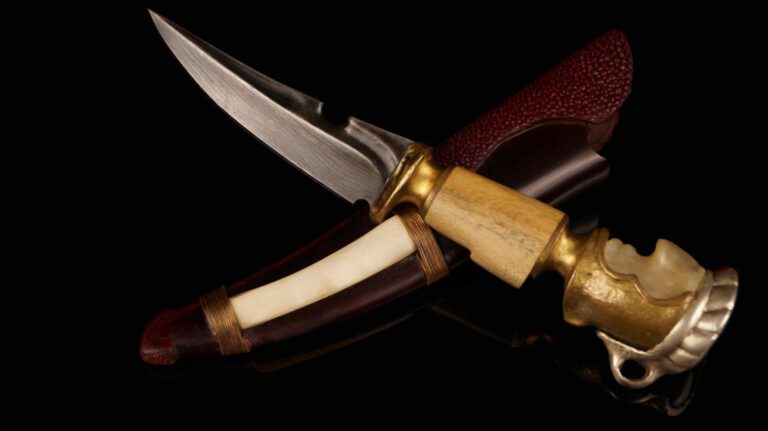
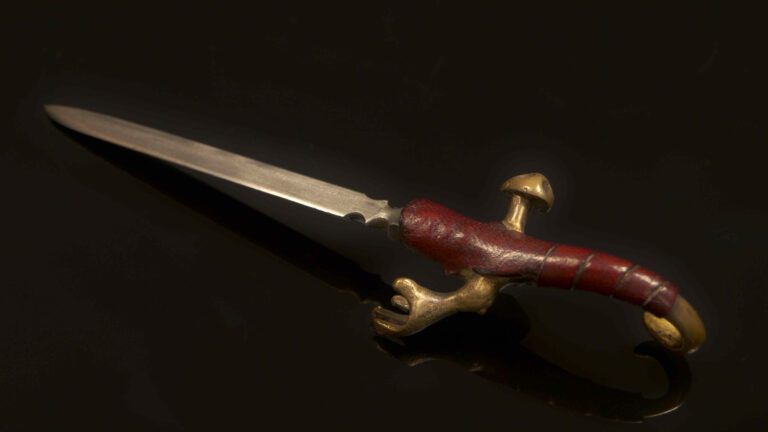
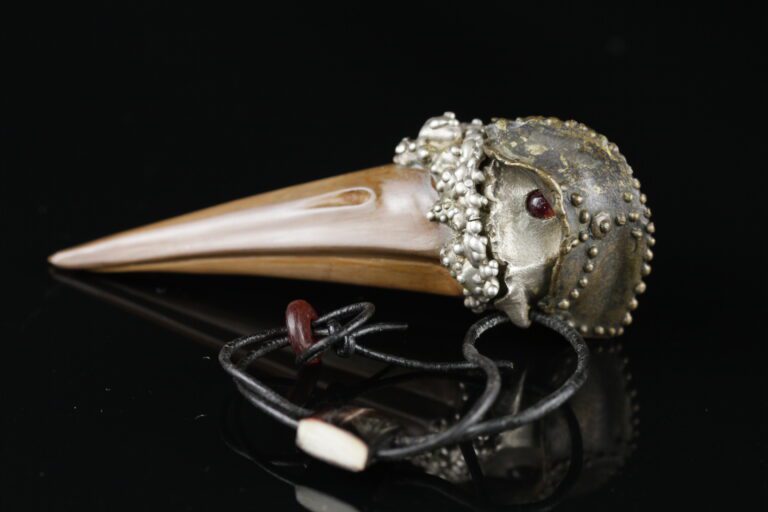
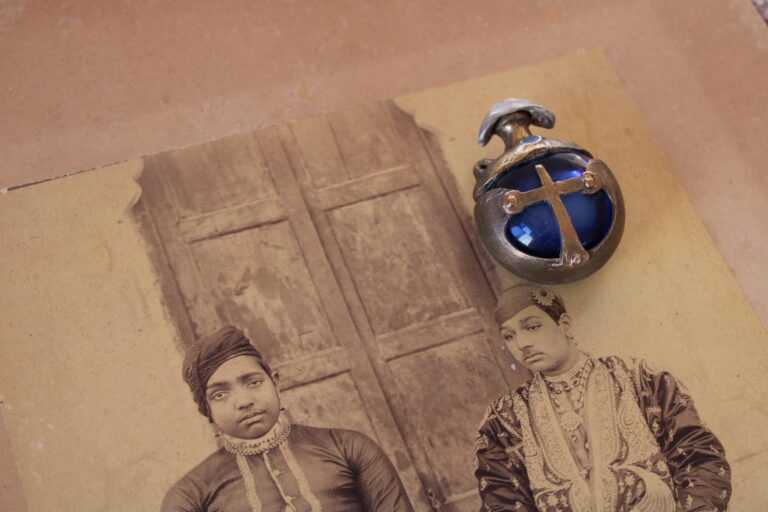
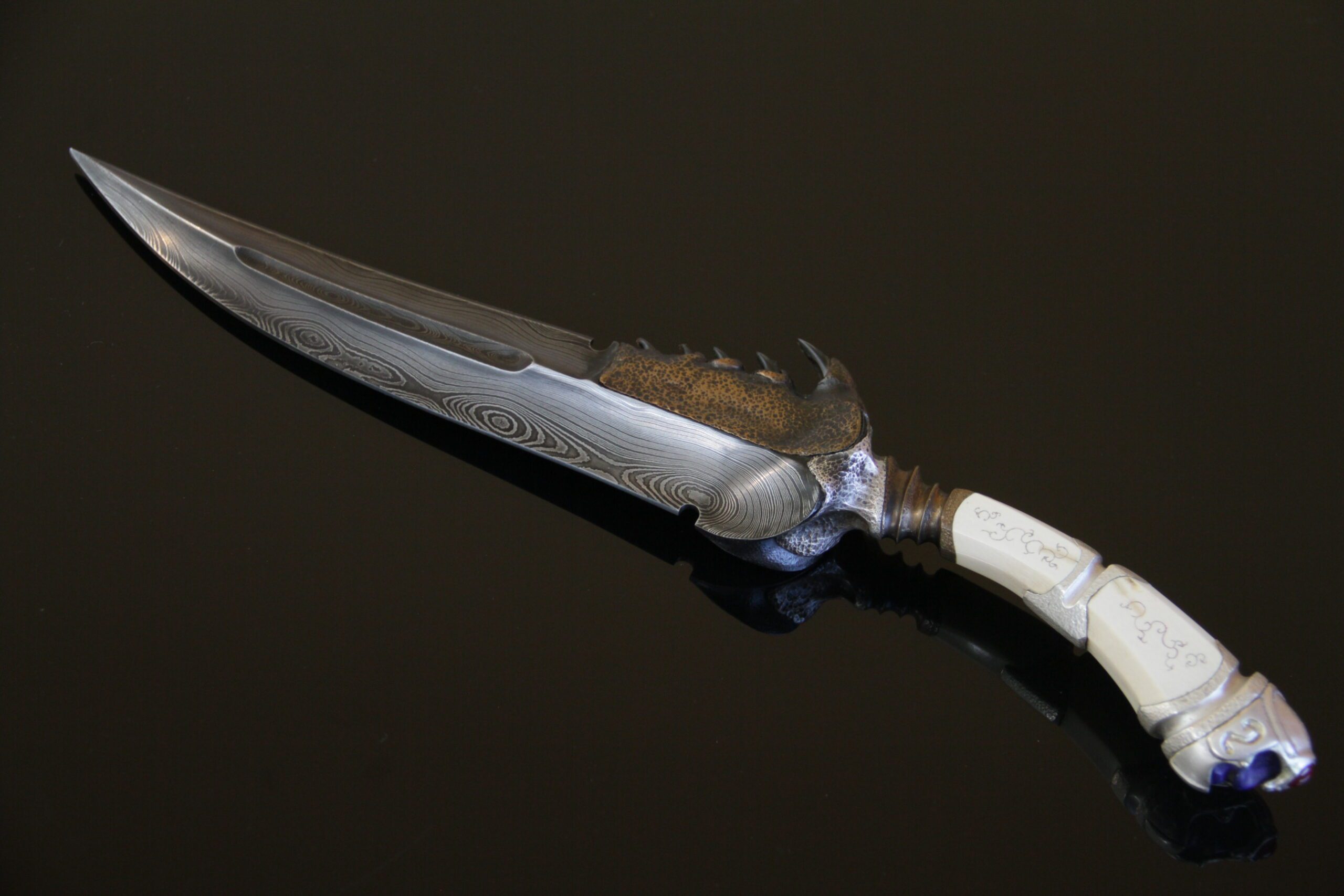
Virgil England’s journey as a knifemaker began in Anchorage, Alaska, in 1970, when he crafted his first four knives as Christmas gifts. Living in one of the most primitive and dangerous landscapes in the world left a lasting impression on him, shaping both his outlook on life and his artistic vision. As Virgil explains, “I was living in one of the most primitive and dangerous landscapes existent in the world. It made a serious impression on my view of the life around me.”
By 1975, he had joined the Knifemakers’ Guild, but it was the creation of his first Fantasy knife that same year that defined the course of his career. Over the next four decades, Virgil immersed himself in the techniques of traditional armorers, creating extraordinary knives and sculptures that feel less like modern creations and more like ancient artifacts—each one reflecting a mastery of historical craftsmanship and imaginative design.
Virgil England’s pursuit of mastering ancient armoring techniques presented its own set of trials. His distinctive style is characterized by “fantasy knives” often complete with intricate backstories and ornate accessories. He doesn’t shy away from combining unlikely materials, shapes, and constructions, pushing the boundaries of what a knife can be. This dedication to unique artistry and historical accuracy has made his work highly collectible and globally recognized. His knifemaking isn’t just about creating a functional tool; it’s about crafting a piece of art that tells a story and embodies the spirit of traditional craftsmanship. This commitment to his singular vision, even as the “Golden Era” of custom knifemaking passed, solidified his reputation as an influential figure in the world of artisanal knives.
A New Horizon in Cambodia
Having honed his craft and established a formidable legacy in the knifemaking world, Virgil England embarked on a new chapter of his journey, moving to Cambodia. While the specific details of this move are not widely publicized, it signifies a “return” in the hero’s journey sense, bringing his accumulated wisdom and unique artistic vision to a new environment. In Cambodia, he continues his work, enriching the global landscape of custom knifemaking with his distinctive creations. His relocation demonstrates a continued pursuit of his passion, adapting his renowned craftsmanship to a new setting, and further solidifying his position as a true master of his art.
Persepolis
The name “Persepolis” comes from the Greek word Περσέπολις (Persepolis), which is a compound of Pérsēs (Πέρσης) meaning “Persian” and pólis (πόλις) meaning “city.” Therefore, it translates to “the Persian city” or “the city of the Persians.”